What to Pack (and Wear) on a Komodo Boat Trip
Flores Boat Trip Expeditions Editorial Desk 9 min read
The short answer: pack light, pack for salt and strong sun, and put everything in a soft duffel or backpack — never a hard suitcase, because there is no room for one in a shared boat cabin. For a two- to four-night Komodo boat trip you genuinely only need quick-dry clothes, two swimsuits, reef-safe sunscreen, a wide-brim hat, sturdy sandals plus one pair of trainers for the Padar climb, a power bank, a small dry bag and a seasickness remedy. Everything below is the coordinator’s version of that list — what I actually watch travelers get right and get wrong at the harbour in Labuan Bajo and Bangsal.
This guide covers open trips: shared wooden boats where you sleep on an open deck or in a small cabin, wash with limited fresh water, and spend most of the day in and out of the sea. If you are still choosing between a one-day trip and a multi-day sailing, read the 3-day Komodo boat trip and the 4 days, 3 nights Lombok to Flores boat trip first — the number of nights on board decides how much you carry.
The Komodo Boat Trip Packing List
Here is the full checklist in one table. It is built for a 3D2N or 4D3N open trip in the calm season; add the rainy-season items lower down if you sail between December and February.
| Category | What to bring | Why it matters on a boat |
|---|---|---|
| Clothing | 2–3 quick-dry T-shirts, 1 light long-sleeve, 2 shorts, sarong, 1 warm layer for night sailing | Cotton stays wet and smells; quick-dry fabric is dry by morning. Nights at sea get cool and windy. |
| Swim | 2 swimsuits, rash guard, snorkel mask if you own one | You swim several times a day; a second suit means a dry one is always ready. Rented masks often leak. |
| Footwear | Sturdy sport sandals + 1 pair of trainers or trail shoes | Sandals for deck and beach; closed shoes for the steep, rocky Padar and Komodo trails. |
| Sun | Reef-safe sunscreen SPF 50, wide-brim hat, polarised sunglasses, lip balm with SPF | Midday sun on open water burns fast, even under cloud. Reflected glare doubles the exposure. |
| Health | Seasickness tablets or bands, personal medicines, small first-aid kit, mosquito repellent | Pharmacies are hours away once you sail. Mosquitoes appear at dusk anchorages. |
| Power & tech | 10,000–20,000 mAh power bank, charging cables, waterproof phone pouch | Deck sockets are few and unreliable; a power bank is the only charging you can count on. |
| Dry storage | 5–10L dry bag, a few zip-lock bags, quick-dry travel towel | Spray reaches everything on deck. A dry bag keeps your phone, passport and camera safe. |
| Documents & cash | Passport or ID, printed booking, small IDR cash for park fees and extras | Card machines do not exist at the park gate. Fees are paid in cash on the spot. |
What to Wear on a Komodo Boat Trip
Dress for a floating campsite, not a resort. During the day you live in a swimsuit, a rash guard and shorts, with a quick-dry T-shirt thrown on when you are out of the water. The single biggest upgrade is a long-sleeve rash guard or light UPF shirt: it lets you snorkel for an hour over Manta Point without cooking your shoulders, and it saves your sunscreen for your face and legs.
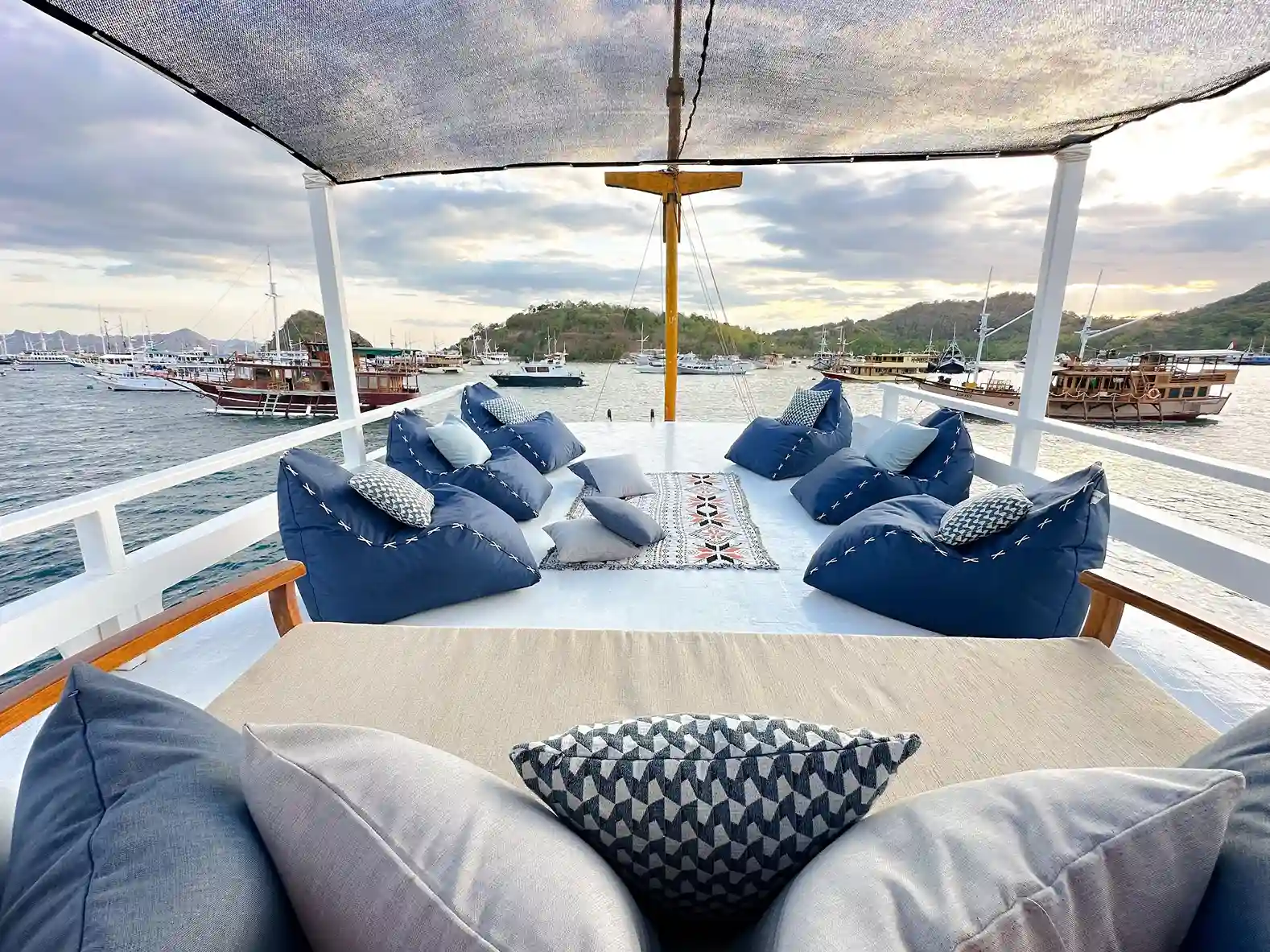
For the evening, bring one warm layer. Once the boat is moving after dark the wind over an open deck is genuinely cold, and the mattresses on a deck-class boat are exposed to the breeze. A light hoodie or a windproof shell plus a sarong doubles as a blanket. If you are unsure whether to book a deck spot or a cabin at all, the trade-off in comfort, warmth and privacy is covered in our guide to deck versus cabin on an open trip.
Keep it modest at village and ranger stops: a sarong over your swimsuit is enough, but bare chests and bikinis alone are not appropriate when you step onto the jetty at a park station.
Shoes: Deck, Sand and the Padar Climb
Two pairs is the sweet spot. Sport sandals with a heel strap handle 90 percent of the trip — wet decks, sandbars, dinghy transfers and pink beaches. But the Padar viewpoint and the Komodo and Rinca dragon trails are steep, dusty and rocky, and every season someone slips in flip-flops. Bring one pair of trainers or light trail shoes for those landings. Flip-flops alone are the most common packing mistake I see. Read what the island landings actually involve in our Padar, Rinca and Komodo landings guide.
Sun, Salt and Skin
The sea multiplies the sun. Pack reef-safe SPF 50 (mineral, oxybenzone-free — it protects the reefs you came to see and is increasingly expected in the marine park), a wide-brim hat that ties on so the wind does not take it, and polarised sunglasses. Reapply sunscreen every two hours and immediately after every swim; the water washes it off faster than you think. A small aloe gel is worth its weight if you do get caught out on day one.
Salt is the other enemy: it stiffens hair, irritates eyes and corrodes unprotected electronics. A freshwater rinse on board is limited to a scoop or two, so a travel towel and a change of dry clothes each evening keeps you comfortable.
Seasickness: Pack It Even If You Never Get Sick
The crossing between Lombok, Sumbawa and Flores includes open-water stretches where the swell builds, especially in the afternoon. Even confident travelers can turn green on the Sape Strait. Bring your preferred remedy — tablets taken the night before, or acupressure bands — and a few plain crackers. If you are prone to motion sickness, choose a lower, mid-boat sleeping spot and pick your season carefully; our honest breakdown of rough seas and seasickness explains when the water is calmest and when it is not.
Power, Phones and Keeping Gear Dry
Assume you cannot charge anything reliably. Most open-trip boats have a couple of shared sockets running off a small generator that is off for much of the night, so a power bank of at least 10,000 mAh is the difference between photos on day three and a dead phone. Bring a waterproof phone pouch for dinghy transfers and snorkeling, and keep your passport, cash and electronics inside a 5–10 litre dry bag whenever the boat is moving — spray reaches the whole deck.
What NOT to Pack
- A hard-shell suitcase. There is nowhere to store it. Soft duffels and backpacks squash into the hold; suitcases get left on deck in the spray.
- Too many clothes. Three or four outfits is plenty for four days — you will live in a swimsuit and rinse quick-dry items overnight.
- Hair dryers, straighteners, anything high-wattage. The generator cannot run them, and salt air undoes the effort in minutes.
- Valuables you would hate to lose. Jewellery, spare cards and a second laptop have no place on an open deck.
- Single-use plastic water bottles. Bring a refillable bottle; most boats provide a refill dispenser, and the park discourages plastic.
Packing by Season and Boat Class
Two things change your list. First, the season: from December to February expect rain squalls, so add a packable rain jacket, extra zip-lock bags and a second dry set of clothes. In the calm June-to-September window you can pack lighter. Time your trip with our month-by-month guide to the best time for a Flores boat trip. Second, the boat class: deck sleepers need the warm layer and a sarong-blanket most; private-cabin travelers can trade one down for a change of smarter clothes for arrival in Labuan Bajo.
Budget Note: Park Fees and Cash
One packing item is easy to forget — enough Indonesian rupiah in cash for what the boat price does not cover. Komodo National Park entry is paid at the gate, and a dated multi-day ticket for foreign visitors is around IDR 650,000 (checked August 2026), separate from ranger and activity fees. Card machines do not exist there, so carry small notes. See the full breakdown on our Komodo National Park fees page, and how it fits the overall Flores boat trip cost.
Talk to a Coordinator Before You Pack
Not sure what your specific boat provides — towels, snorkel gear, a cabin power point? Ask before you buy anything. Message us on WhatsApp at +62 811 3823 875 or email [email protected] with your route and boat class, and we will tell you exactly what to leave at home.
Frequently Asked Questions
What should I wear on a Komodo boat trip?
During the day, a swimsuit under a quick-dry T-shirt or a long-sleeve rash guard, shorts, a wide-brim hat and polarised sunglasses. In the evening add one warm layer and a sarong, because an open deck gets cold and windy once the boat is moving after dark. Keep a modest cover-up for village and ranger station stops.
Do I need proper shoes for the Padar hike?
Yes. Sport sandals cover most of the trip, but the Padar viewpoint and the Komodo and Rinca dragon trails are steep, rocky and dusty. Bring one pair of trainers or light trail shoes for those landings. Flip-flops alone are the most common packing mistake and cause slips every season.
Is there anywhere to charge my phone on the boat?
Not reliably. Most open-trip boats have only a couple of shared sockets running off a generator that is switched off for much of the night. Bring a power bank of at least 10,000 mAh, and a waterproof pouch, so your phone and camera survive a two- to four-night trip.
What should I not bring on a Komodo open trip?
Skip a hard-shell suitcase (there is nowhere to store it), high-wattage items like hair dryers, valuable jewellery, and single-use plastic bottles. Pack a soft duffel or backpack, keep clothing to three or four outfits, and bring a refillable water bottle instead.
Do I need to pack for rain?
If you sail between December and February, yes. Add a packable rain jacket, extra zip-lock bags and a second dry set of clothes for the wet season. In the calm June-to-September window you can pack lighter, though a small dry bag is worth carrying year-round because of sea spray.
Do I need cash on a Komodo boat trip?
Yes, in Indonesian rupiah. Komodo National Park fees are paid in cash at the gate, and a dated multi-day ticket for foreigners is around IDR 650,000 (checked August 2026), separate from ranger and activity fees. There are no card machines at the park, so carry small notes for fees, tips and extras.