Manta Point, Pink Beach & the Best Komodo Snorkel Stops
Flores Boat Trip Expeditions Editorial Desk 13 min read
The best snorkelling in Komodo happens at four stops that sit on almost every boat trip: Manta Point for reef manta rays, Pink Beach for easy coral right off the rose-tinted sand, Taka Makassar for a shallow turquoise sandbar, and Kanawa for a calm house reef near Labuan Bajo. You do not need a dive certification for any of them — a mask, fins and a life vest are enough. This guide walks through each snorkel stop honestly: what you actually see in the water, how strong the current runs, when visibility is best, and how the stops fit into a one-day speedboat run or a slower overnight sailing. Every site below sits inside Komodo National Park, so park fees apply on top of your boat price (checked August 2026).
| Snorkel stop | What you see | Water & difficulty | Best window |
|---|---|---|---|
| Manta Point (Karang Makassar) | Reef manta rays over a cleaning station | Open water, current can be strong | Calmest Jun–Sep; mantas pass year-round |
| Pink Beach (Pantai Merah) | Hard coral and reef fish off the sand | Shallow, calm, beginner-friendly | Any calm morning |
| Taka Makassar | White sandbar, shallow lagoon, passing rays | Very shallow, easy | Low to mid tide, calm days |
| Kanawa Island | House reef, turtles, coral garden | Calm, beginner-friendly | Year-round, close to Labuan Bajo |
Want to know which of these stops is running tomorrow and whether the sea is snorkel-friendly? Message us on WhatsApp at +62 811 3823 875 (wa.me/628113823875) or email [email protected] — we read the harbour manifests directly and can tell you what the skippers are planning for the day.
Manta Point: Snorkelling with Reef Mantas
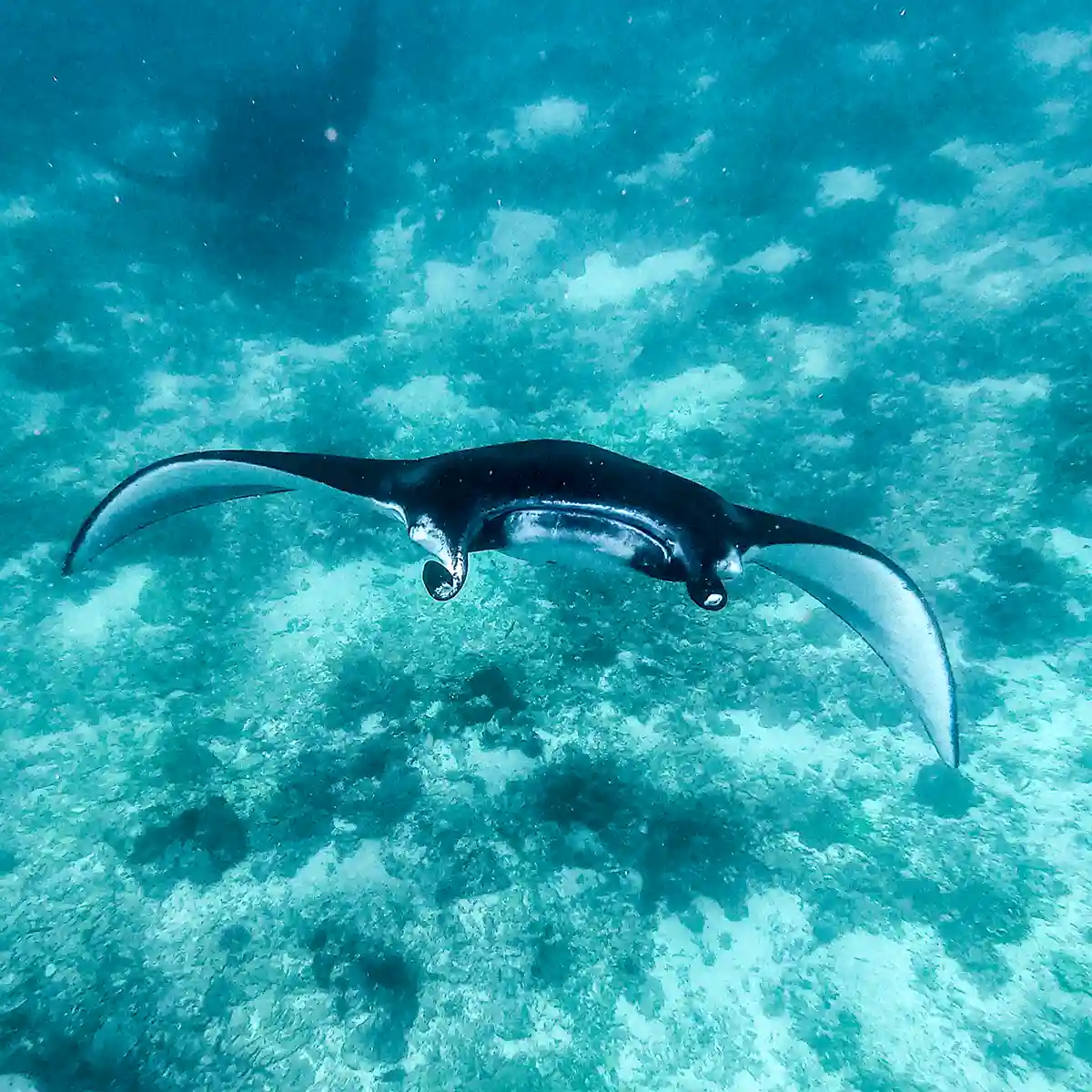
Manta Point — the shallow channel known locally as Karang Makassar — is the headline snorkel stop in Komodo and the reason many people book the trip at all. It is a manta cleaning station: reef manta rays glide in over the sea grass to have parasites picked off by small fish, and on a good day you drift above two-, three- or four-metre wingspans passing a few metres below you.
Be honest with yourself about the conditions here. This is open water with real current, and you snorkel it as a drift — the boat drops you up-current, you float along watching for mantas, and the crew picks you up down-current. It is not a paddle-around-the-reef stop. If you are a nervous or first-time snorkeller, stay close to the crew, keep your life vest on, and tell the skipper before you jump in. Sightings are never guaranteed by any operator, and anyone who promises you mantas is over-selling. Your odds are best on a calm morning with clear water, and the crew will read the tide and skip the stop if the current is dangerous. Manta Point features on both the fast day trip and the longer overnight routes, so if it is your priority, compare how much water time each format gives you before you book.
Pink Beach: Easy Coral Off the Rose Sand
Pink Beach — Pantai Merah, near Komodo Island — is the friendliest snorkel of the trip and the one that most surprises people. The sand really does read pink, a blush created by fragments of red organ-pipe coral washed in and mixed through the white grains; it looks strongest when the sand is wet and the light is low. Just off the beach sits a shallow, colourful reef you can enjoy without going far from shore.
This is the stop for beginners, families and anyone who wants to relax rather than drift. The water is usually calm, the reef starts in waist-to-chest depth, and you will see hard coral, anemones, clownfish and small reef schools without any current fighting you. Keep your fins off the coral, float rather than stand, and you protect a reef that thousands of people visit. If snorkelling is the point of your trip but the idea of scuba is not, you are in exactly the right place — our snorkeller’s guide to a Komodo boat trip without diving shows how much of the park you can see on the surface alone.
Taka Makassar: The Shallow Sandbar Drift
Taka Makassar is a crescent of white sand that appears out of the middle of the sea, ringed by shallow turquoise water and a fringing reef. It sits right beside Manta Point, so most boats pair the two: a drift for mantas, then a swim and a walk on the sandbar to warm up. Because the water here is shallow and clear, it is a gentle stop even when Manta Point next door is choppy.
The reef edge around the sandbar holds reef fish and, if you are lucky, a passing ray or reef shark cruising the drop-off. Tide matters here more than anywhere else on the route — at very low tide the sandbar is a wide beach, at high tide it can be almost submerged, and the skipper times the visit around it. It is one of the most photographed spots in the park, so expect company at midday; the light and the crowds are both kinder early. Along with Manta Point and Pink Beach, Taka Makassar is one of the core three stops on a fast one-day run out of Labuan Bajo.
Kanawa, Siaba & the Calm Reefs Near Labuan Bajo
Not every good snorkel is deep inside the park. Closer to Labuan Bajo, a cluster of easy reefs makes a perfect first or final stop on the water. Kanawa Island has a genuine house reef that drops away from a long jetty into a coral garden, with green turtles a regular sight and calm, clear water most of the year. Siaba Besar is the turtle stop — a sheltered bay where you drift slowly over sea grass looking for them feeding below. Both are beginner-friendly and often used to round out a trip when the outer sites are rough.
One name you will hear that is not a snorkel stop is Batu Bolong — a spectacular pinnacle famous among divers for its strong current. It belongs to the scuba world, not the mask-and-fins one, so if a boat offers it as a “snorkel”, ask hard questions about the current first. For everyone else, Kanawa and Siaba deliver the calm, colourful, easy snorkelling that a fast day at Manta Point cannot.
How the Snorkel Stops Fit Your Boat Trip
Which stops you get, and how long you spend at each, depends entirely on the trip you book. The trade-off is simple: a day trip gives you the highlights fast, an overnight trip gives you the same reefs with far more time in the water and calmer, less crowded sessions.
| Trip format | Snorkel stops you get | Time in the water |
|---|---|---|
| One-day speedboat | Usually Manta Point, Pink Beach, Taka Makassar (Kanawa if the sea allows) | Short — 30 to 45 minutes per stop, fast pace |
| 3D2N overnight | All of the above plus Siaba, Kanawa and quieter early sessions | Long — multiple sessions, dawn drops before the crowds |
If you have one free day, the fast option covers the big three — see the full route and timings on our Komodo day trip by speedboat page. If snorkelling is the whole reason you are here, spend the extra and go slow: the Labuan Bajo Komodo 3D2N boat trip anchors near the best reefs and drops you in at dawn when the water is clearest and the sites are empty. Joining a shared group keeps the cost down — a Komodo open trip puts you on a per-person rate for two or three days on the water, with a market benchmark for a shared multi-day sailing starting around USD 300 per person (Komodo Luxury open-trip listing, checked August 2026).
Gear, Safety & Reef Etiquette
Every shared boat carries a basic mask, fins and a life vest, and for most stops that is all you need. A few small choices, though, make the difference between a good snorkel and a great one.
- Bring your own mask if you can. A mask that seals to your face beats a leaky boat spare every time. A budget one from a Labuan Bajo shop works fine.
- Keep the life vest on at Manta Point. It keeps you at the surface and visible to the crew in the drift — it is a safety tool, not a beginner’s badge.
- Never touch or chase the mantas. Stay horizontal at the surface, keep your fins away from them, and let them pass below. Getting too close scares them off for everyone.
- Reef-safe sunscreen and a rash guard protect both your skin and the coral; float over the reef, never stand on it.
- Tell the crew if you are a weak swimmer. They will keep you close, hand you a float ring, and skip the drift stops that are not safe for you.
Sea conditions decide everything. The dry season from April to November brings the calmest water and clearest visibility; the December-to-February wet season is windy, and Manta Point is the first stop to be cut when the swell builds. If you are prone to motion sickness on the crossing between sites, our honest guide to rough seas and seasickness is worth a read before you sail.
What You Pay to Snorkel These Stops
The reefs are free; the access to them is not. Komodo National Park charges an entrance and conservation fee that you pay at the gate on top of your boat price, and snorkelling or activity surcharges can apply at some sites. For a one-day visit budget roughly IDR 250,000 per foreigner on a weekday; the dated multi-day conservation ticket of IDR 650,000 applies to overnight 3D2N trips rather than single-day visits (checked August 2026). The full breakdown by island, nationality and day of the week is on our Komodo National Park fees page — read it before you go so you carry the right cash to the ranger station.
Ready to pick your reefs? Tell us on WhatsApp at +62 811 3823 875 (wa.me/628113823875) or [email protected] whether Manta Point, calm house reefs, or both matter most, and we will match you to a boat and a route that actually delivers them.
Frequently Asked Questions
Can you snorkel with manta rays in Komodo without diving?
Yes. Manta Point (Karang Makassar) is a shallow cleaning station where reef mantas pass a few metres below the surface, so you snorkel it with a mask, fins and life vest — no dive certification needed. It is a drift snorkel in open water with current, so stay close to the crew and keep your vest on. Sightings are never guaranteed, and your best odds are on a calm, clear morning.
Is Pink Beach good for snorkelling?
Pink Beach (Pantai Merah) is the easiest and friendliest snorkel of the trip. A shallow, colourful reef starts just off the sand in calm, beginner-friendly water, with hard coral, anemones and reef fish close to shore. It is ideal for families and first-time snorkellers who want to relax rather than drift.
Why is Pink Beach pink?
The sand takes its blush from fragments of red organ-pipe coral that wash in and mix through the white grains. The colour looks strongest when the sand is wet and the light is low, so it reads more pink early in the morning or late in the afternoon than under harsh midday sun.
What is the best snorkelling stop on a Komodo boat trip?
Manta Point is the star for the chance to drift with reef mantas, but Pink Beach is the best easy reef and Kanawa the calmest house reef near Labuan Bajo. A fast day trip usually covers Manta Point, Pink Beach and Taka Makassar; an overnight trip adds Siaba and Kanawa with far more time in the water.
Do I need my own snorkel gear?
No — every shared boat carries a basic mask, fins and life vest. Bringing your own mask is worth it, though, because a mask that seals well to your face beats a leaky boat spare, and a budget one from Labuan Bajo does the job. Reef-safe sunscreen and a rash guard are the other two things worth packing.
When is the best time of year to snorkel in Komodo?
June to September is the calmest stretch of the dry season, with the clearest water and clearest visibility — the best odds every snorkel stop runs. December to February is wet and windy, when Manta Point is the first site to be cut and outer reefs are often skipped for calmer ones like Kanawa and Siaba.