Is a Private Flores Sailing Tour Safe for Young Children?
Flores Boat Trip Expeditions Editorial Desk 12 min read
- Constant Supervision: A low guest-to-crew ratio ensures multiple sets of eyes are always on the children.
- Tailored Itineraries: Journeys are adapted to a child’s pace, avoiding strenuous treks and deep-water activities.
- Specialized Equipment: Reputable charters provide child-sized life vests and comprehensive, marine-grade first-aid kits.
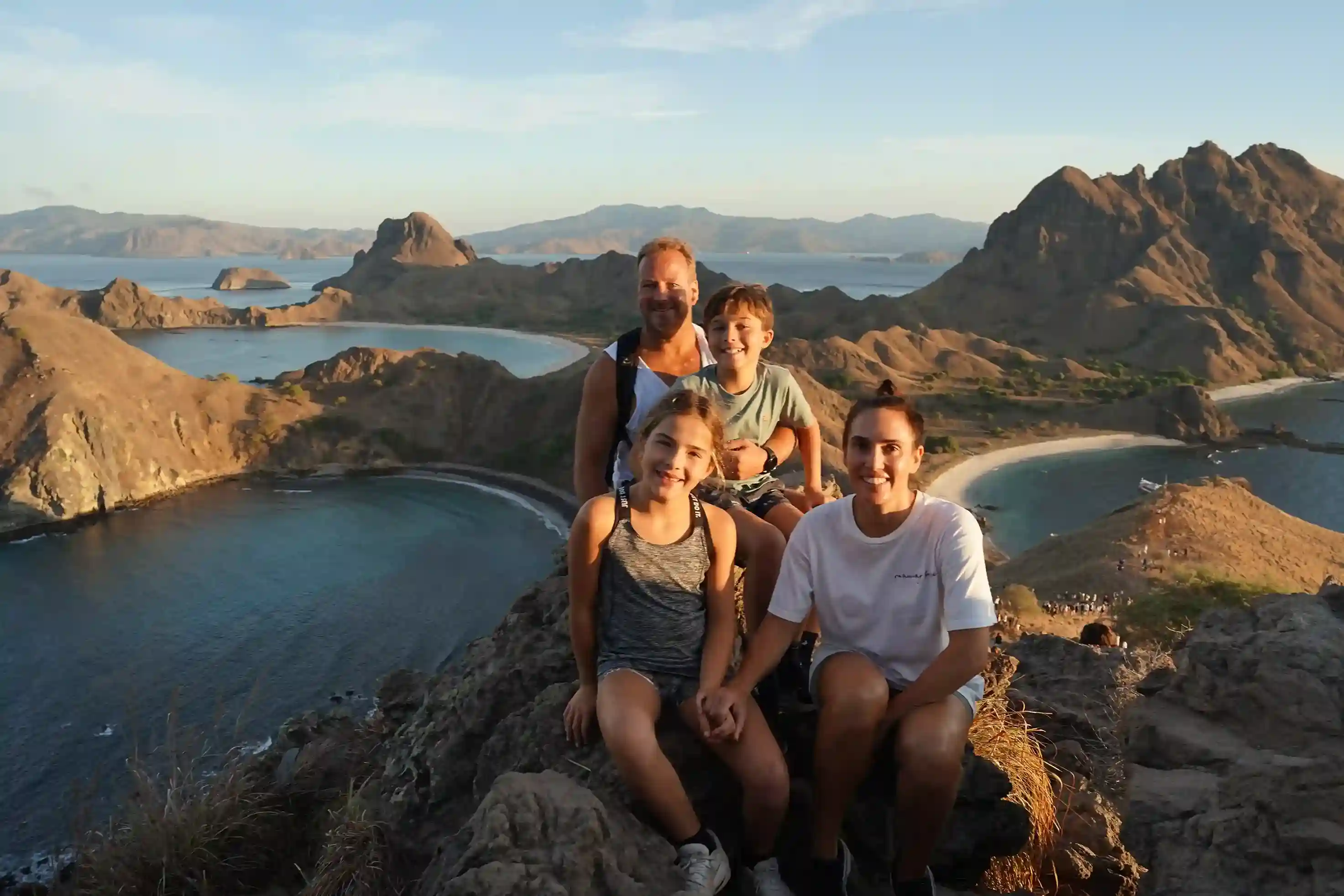
The teak deck is warm underfoot as the sun climbs over the volcanic silhouette of Padar Island. A lone sea eagle circles high above the mast, its cry cutting through the gentle hum of the engine. Below, the Flores Sea shifts from deep cobalt to a translucent turquoise, revealing the coral gardens just beneath the surface. This is the magnetic pull of the Komodo archipelago, a landscape that feels raw, ancient, and profoundly wild. For years, I’ve written about this corner of Indonesia for discerning adults seeking true exploration. But today, my perspective is different. I’m watching my four-year-old daughter attempt to teach a crew member a nursery rhyme, and the question I’m here to answer feels deeply personal: Can this Jurassic world truly be a safe playground for a family with young children? The calculus for family travel is always one of risk versus reward. Here in Flores, I’ve discovered that when meticulously planned, the rewards are immeasurable, and the risks are far more manageable than you might imagine.
Demystifying the Primal Fears: Dragons and Deep Water
Let’s address the two elephants—or rather, dragons—in the room: the famed Komodo dragons and the vast, open sea. The prospect of bringing a small child to an island inhabited by the world’s largest lizard, a creature weighing up to 90 kilograms, is understandably daunting. However, the reality of a dragon encounter is a highly controlled and safe experience. On both Rinca and Komodo islands, visiting the dragons is only permitted with multiple, highly-trained local rangers. As we learned from our guide, Anto, who has led these walks for over a decade, the park regulations are strict and effective. Visitors are required to stay in a tight group, maintain a minimum distance of 5 meters from any dragon, and are advised against sudden movements. The animals near the ranger stations are habituated to human presence and are typically lethargic, especially during the heat of the day. The key is choosing a private Flores boat trip, which allows you to time your visit for early morning, avoiding both the crowds and the peak sun. The rangers are adept at managing group dynamics, ensuring children are kept close and feel secure. The experience becomes less about perceived danger and more about a profound lesson in respecting wildlife, a far cry from a sterile zoo enclosure.
The second major concern is the water itself. The Flores Sea is part of the Coral Triangle, an area of immense marine biodiversity. While there are deep channels with strong currents—which experienced captains know to avoid—a private charter’s primary advantage is its ability to seek out the calmest, most protected bays for anchorage. The water in the lagoons of places like Siaba or the iconic Pink Beach is often as placid as a swimming pool, with gentle, sandy slopes perfect for toddlers. On our vessel, child-sized life vests were mandatory for our daughter, even when just splashing in the shallows. The crew, a team of six for our family of four, provided an level of supervision. While one crew member prepared fresh fruit skewers, another was in the water with us, pointing out harmless sea stars and parrotfish, acting as a dedicated lifeguard. This isn’t just about safety; it’s about enabling a deeper, more relaxed engagement with the marine environment for the entire family.
The Vessel as a Floating Sanctuary: Vetting Your Charter
The single most important decision determining if a private Flores sailing tour is safe for your child is the choice of your vessel and operator. A traditional Indonesian Phinisi is a work of art, but beneath its romantic, twin-masted exterior must lie modern safety standards. When I vet charters for editorial features, I look beyond the thread count of the linens. I inquire about the last dry-dock maintenance, the brand of the engine, and the specifics of their emergency communication systems. For a family, the checklist becomes even more granular. The railings, for instance, should be high and secure, with no gaps a small child could slip through. Decks should be kept clear of ropes and obstacles, offering wide, safe passages. We insist on seeing proof of safety equipment, specifically asking about child-sized personal flotation devices (PFDs). A generic adult life vest is dangerously inadequate for a child under 20 kilograms.
Our experience with Flores Boat Trip Expeditions set a benchmark. The onboard first-aid kit was not a simple box of plasters; it was a comprehensive medical case with everything from antiseptic solutions and burn cream to splints and sting relief medication, all checked and restocked before our departure from Labuan Bajo. The captain explained that the entire crew undergoes biannual first-aid and emergency response training. Furthermore, the vessel was equipped with a satellite phone and a high-frequency VHF radio, ensuring we were never out of contact, even when anchored in the most remote coves of the Komodo National Park, a protected area spanning over 1,700 square kilometers. This level of preparedness transforms the boat from a simple mode of transport into a secure, self-contained basecamp. It becomes a floating sanctuary where children can play, eat, and sleep in complete safety, allowing parents to fully immerse themselves in the magnificent surroundings without a constant undercurrent of anxiety.
Curating a Child-Centric Itinerary: The Luxury of Pacing
The word “expedition” can conjure images of grueling treks and demanding schedules. This is where the distinction between a standard group tour and a private charter becomes most critical for families. A shared tour operates on a fixed, often aggressive, itinerary designed to tick off as many locations as possible in a limited time. This pace is simply untenable for young children. A private tour, by contrast, is built entirely around your family’s rhythm. The itinerary is a suggestion, not a mandate. If your toddler is enthralled by the thousands of flying foxes taking flight at sunset over Kalong Island, you can stay and watch for an extra hour. If a morning hike to the viewpoint on Padar Island seems too ambitious, the captain can instead motor to a placid, unnamed beach where the only objective is building sandcastles and collecting shells.
This flexibility proved to be the cornerstone of our trip’s success. Our days were structured around our daughter’s needs. We opted for shorter, 20-minute walks instead of hour-long hikes. We spent long, leisurely afternoons anchored at Taka Makassar, a tiny sandbar where the water is only ankle-deep for a hundred meters in every direction. The 25-nautical-mile journey from Labuan Bajo to the heart of the park was broken into smaller, more manageable 90-minute sailing segments. During these periods, the deck became a classroom and a playroom. The crew taught our daughter how to tie simple knots and identify constellations, transforming transit time into an engaging part of the adventure. This ability to control the pacing, to dial down the intensity, and to build in ample time for rest and spontaneous play is what makes a potentially challenging destination entirely accessible and enjoyable for even the youngest travelers.
Onboard Life: Nutrition, Comfort, and Unseen Guardians
Beyond the grand landscapes, the quality of daily life onboard is a crucial safety and comfort factor. The concern over food safety and catering to a child’s particular tastes vanishes on a well-managed private charter. Our chef, Ibu Siti, met with us before we even left the harbor to discuss our daughter’s preferences. Her galley produced a delightful mix of sophisticated Indonesian fare for us and simple, comforting meals for our little one—plain pasta, grilled fish with no sauce, and a seemingly endless supply of fresh mango, watermelon, and bananas. Hydration, a key health concern in the tropics where temperatures average 30°C, was made easy with unlimited access to sealed bottled water and fresh juices. This bespoke culinary experience eliminates a significant source of parental stress.
Comfort extends to the living quarters. The oppressive afternoon heat was never an issue, thanks to powerful air-conditioning in our cabin, which allowed for cool, restorative midday naps. The gentle rocking of the boat at anchor was a natural sleep aid, ensuring our daughter was well-rested and energetic for each day’s activities. But the most profound element of onboard life was the crew. They became an extension of our family—unseen guardians who were always aware of where our daughter was. While we snorkeled, a crew member would watch her from the tender. While we dined, they would engage her in a game. This constant, gentle supervision provided a layer of security that allowed us, as parents, to relax in a way that is often impossible on a family holiday. It’s a level of personalized care and attention to detail that defines the luxury of a private sailing expedition in Komodo.
Health and Medical Preparedness in a Remote Paradise
No responsible travel editor would discuss a remote destination without a clear-eyed assessment of medical preparedness. The allure of Flores is its wildness, but that also means you are hours away from advanced medical care. This is where an operator’s professionalism is truly tested. A reputable charter’s emergency action plan should be transparent and robust. Before booking, you should ask: What is the protocol for a medical emergency? The correct answer involves immediate contact with the mainland office via satellite phone and charting the fastest course back to Labuan Bajo. The town is home to the international-standard Siloam Hospital, which opened in 2016 and is equipped to handle a range of emergencies. For anything more severe, the standard procedure is medical evacuation to Bali, which is why comprehensive travel insurance with evacuation coverage is non-negotiable and a mandatory requirement for most high-end operators.
For the more common childhood ailments—a scraped knee from a coral beach, a mild case of seasickness, or too much sun—the crew’s training and onboard supplies are the first line of defense. Our Phinisi was stocked to handle these minor issues swiftly. We also brought a small medical kit from home with children’s paracetamol, antihistamines, and any other specific medications our daughter might need. According to Indonesia’s official tourism board, the waters within the park are generally calm, but for the initial open-water crossing, children’s anti-nausea medication can be a helpful precaution. By understanding the established medical protocols and preparing for minor incidents, you can your journey with confidence, knowing that a strong safety net is in place, even in this far-flung paradise.
Quick FAQ: Your Pressing Questions Answered
What is the minimum age you recommend for a Flores sailing trip?
While we have safely hosted families with infants as young as 18 months, the experience becomes truly magical for children aged three and up. At this age, they can communicate their needs, have more stamina for activities like beachcombing, and are old enough to form lasting memories of seeing turtles and dolphins. A private tour’s adaptability makes it feasible for any age, but the 3-8 age range seems to be a sweet spot for wonder and engagement.
Are there life jackets specifically for toddlers and small children?
Yes, this is a non-negotiable safety standard for any premium operator. We require the age and approximate weight of each child at the time of booking to ensure that we have certified, correctly-sized PFDs (Personal Flotation Devices) ready for them. They are required to be worn when the tender is in motion or during any water activities.
What about mosquitos and the risk of malaria?
The malaria risk within the Komodo National Park and Flores is classified as low-to-none by most travel health organizations. The constant sea breezes on a boat dramatically reduce the presence of mosquitos. Nonetheless, we recommend applying a child-safe, DEET-based insect repellent during land excursions, particularly around sunrise and sunset, as a standard precaution against mosquito-borne illnesses.
How do you handle nap times and bedtime routines?
This is the ultimate advantage of a private charter. Your family’s schedule is the only schedule that matters. The boat is your floating villa. The quiet, cool, air-conditioned cabins are available at any time for naps. If your child’s bedtime is 7:00 PM, the evening is structured around that. The crew can prepare their dinner early, and you can put them to bed before enjoying a quiet, leisurely dinner on deck under the stars. The journey adapts to you.
The question of whether a private Flores sailing tour is safe for young children can be answered with a confident yes, but with a critical condition: it all depends on the integrity of the operator. Safety here is not a matter of chance; it is the direct result of meticulous planning, a professionally maintained vessel, a highly trained crew, and the inherent flexibility of a private charter. This is not a trip you book based on the lowest price. It is an investment in an experience, where a significant portion of that investment goes toward peace of mind. What we discovered in the waters of Komodo was that with the right framework of safety and support, this wild, prehistoric world doesn’t have to be off-limits to families. It can be the most extraordinary classroom and playground imaginable. To begin designing a journey that balances profound adventure with absolute security, you can explore the fleet and sample itineraries for your family’s next flores boat trip.