Flores Liveaboard vs Day Trip: Which is Best for You?
Flores Boat Trip Expeditions Editorial Desk 10 min read
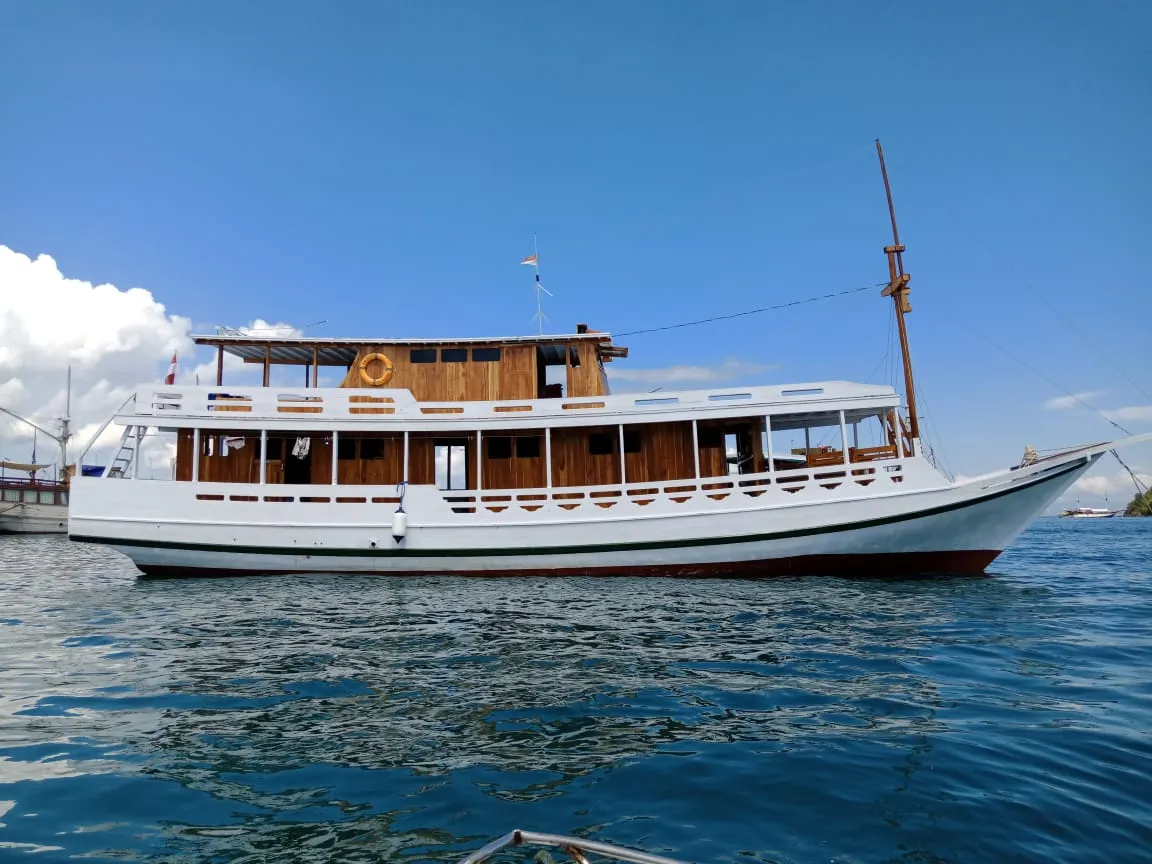
- Liveaboard: A multi-day, all-inclusive floating expedition allowing for unhurried exploration, exclusive access, and experiences like sunrise hikes and nocturnal wildlife viewing.
- Day Trip: A fast-paced, 8 to 10-hour tour from Labuan Bajo hitting only the most popular, and often crowded, islands.
- The Deciding Factor: Your choice hinges on your available time and your desire for either a quick highlights reel or a deep, narrative experience of the archipelago.
The first light is still an hour away, but the ship is alive. There’s a low, resonant hum from the engine room of our phinisi, a steady heartbeat against the gentle lap of the Flores Sea. On the top deck, the air is thick with the scent of salt and the promise of strong, local coffee brewing in the galley below. Silhouetted against a sky just beginning to blush from indigo to violet, the jagged, volcanic peaks of the Komodo archipelago rise like ancient sentinels. This is the moment of quiet communion that defines the liveaboard experience—a moment impossible to capture on a fleeting visit. The question we receive most often from our readers is not whether to visit this remarkable corner of Indonesia, but how. The choice between a high-speed day trip and a multi-day liveaboard expedition is a fundamental one, and it will dictate the very nature of your adventure. It is the difference between seeing a place and truly experiencing it.
The Anatomy of a Day Trip: A High-Speed Survey
Let’s be precise about what a day trip from Labuan Bajo entails. It is an exercise in logistical efficiency, designed to deliver the archipelago’s three most iconic vistas in the shortest possible time. Your day begins before dawn, typically with a 5:30 AM hotel pickup, leading to a crowded jetty where dozens of speedboats, engines whining, prepare for a synchronized departure. These vessels are built for one purpose: speed. Reaching velocities of up to 40 knots, they cut across the water, delivering you to your first stop, often Padar Island, in roughly 90 minutes. You, along with several other boatloads of visitors, will make the 30-minute climb to its famous viewpoint, capture the requisite photograph of the tri-colored bays, and descend within the hour. The schedule is exacting. From Padar, it’s a short hop to either Rinca or Komodo Island for a 60-minute trek with a local ranger to see the dragons. The final major stop is usually the celebrated Pink Beach for a quick snorkel, followed by a brief pause at a manta ray aggregation site before the long, often bumpy, ride back to Labuan Bajo, arriving just as the afternoon light begins to fade. The entire experience, from port to port, lasts about 10 hours. While it delivers on its promise of seeing the highlights, the pace is relentless. It’s a survey, not a study; a glimpse, not an immersion.
The Liveaboard Immersion: Living on Archipelago Time
A liveaboard is not merely a mode of transport; it is your residence within the park. This distinction is critical. Instead of spending hours commuting from a land-based hotel, your journey between islands occurs while you are dining, sleeping, or enjoying a sunset cocktail on the deck. The pace is dictated by the rhythms of the natural world, not a rigid timetable. A typical three-day, two-night flores boat trip allows for a narrative to unfold. Day one might involve a gentle introduction with a snorkel at Kelor Island, followed by an afternoon trek on Rinca to see the dragons when the day-trippers have departed. As dusk settles, the boat anchors near Kalong Island, and you witness a truly primordial spectacle: the nightly exodus of tens of thousands of giant fruit bats, or flying foxes, clouding the twilight sky. This is an experience exclusive to those who stay on the water. The following days are a curated exploration of the park’s immense scale, a territory covering 1,733 square kilometers, as documented by UNESCO. You can be the first group to summit Padar Island for sunrise, enjoying its splendor in near solitude. You can spend hours, not minutes, at a manta cleaning station, waiting for the gentle giants to arrive. The liveaboard transforms the park from a series of photo-stops into a living, breathing ecosystem that you inhabit, even if just for a few days.
The Critical Factor of Time: Pacing Your Flores Adventure
The most significant luxury a liveaboard affords is time. On a day trip, your time at each location is severely constrained. You might have 60 minutes at Padar, 45 minutes at Pink Beach, and 20 minutes in the water at Manta Point. A considerable portion of your day, perhaps three to four hours, is spent in high-speed transit, often with engine noise precluding conversation and windburn as an unwelcome souvenir. The experience is, by necessity, transactional. In contrast, a liveaboard fundamentally alters your relationship with time. The journey itself becomes part of the pleasure. Cruising at a leisurely 8 knots between islands, you have the freedom to read on a shaded daybed, observe marine life from the bow, or discuss the day’s plan with the expedition leader. This relaxed pacing allows for spontaneity—a core tenet of true exploration. If a pod of dolphins appears, the captain can cut the engines. If the snorkeling at Siaba Island reveals a dozen sea turtles, you can choose to linger. “On a day trip, you are a spectator watching a highlight reel,” our expedition leader, a Flores veteran of 15 years named Anton, told me over a freshly grilled snapper one evening. “On a liveaboard, you become part of the ecosystem’s daily rhythm. You wake with it, and you sleep with it.” That temporal shift is the essence of the luxury experience.
Wildlife Encounters: A Tale of Two Timings
For any visitor, the primary draw is the unique fauna, both terrestrial and marine. Here, the scheduling differences between a day trip and a liveaboard have a profound impact on the quality of your encounters. The Komodo dragon (Varanus komodoensis), the world’s largest lizard, is most active during the cooler hours of the early morning and late afternoon. Day trips, by their very nature, arrive mid-day when the equatorial sun is at its zenith. Consequently, visitors often see dragons lying largely motionless, conserving energy in the shade near the ranger station. Liveaboard itineraries, however, are flexible. The captain can schedule your visit to Komodo or Rinca for 7:30 AM, when the dragons are on the move, or for 4:00 PM, increasing the chances of witnessing more dynamic behaviors. This same principle applies beneath the waves. The official tourism portal, indonesia.travel, highlights the region’s incredible marine biodiversity. While day trips visit the main Manta Point, liveaboards can take you to more secluded cleaning stations like Karang Makassar at the precise tidal window when oceanic manta rays, which can have a wingspan of over 5 meters, are most likely to congregate. Furthermore, experiences like night snorkeling, where you can witness nocturnal hunters like moray eels and octopuses, are entirely off the table for a day-tripper.
Comfort, Cuisine, and Cost: Evaluating the Investment
At first glance, the cost differential seems stark. A speedboat day trip might cost $150 per person, while a three-day private charter on a luxury phinisi can run into the thousands. But this comparison is misleading. A liveaboard is an all-inclusive proposition. The price includes your accommodation in a private, air-conditioned cabin with an en-suite bathroom, three multi-course meals per day prepared by a dedicated chef, all snacks and non-alcoholic beverages, and all activities, from snorkeling to paddleboarding. When you factor in the cost of two or three nights in a comparable luxury hotel in Labuan Bajo (which can easily exceed $300 per night), plus the cost of fine dining restaurants, the value proposition of a premium flores boat trip becomes much more compelling. The comfort level is in another league entirely. A day trip offers a hard bench on a speedboat and a pre-packed lunch box. A liveaboard is a floating boutique hotel, with expansive sundecks, elegant dining areas, and a professional crew attending to your needs. The culinary journey alone is a highlight, with menus featuring fresh-caught fish, tropical fruits, and expertly prepared Indonesian and Western dishes—a world away from a styrofoam container of fried rice.
Quick FAQ: Your Flores Expedition Questions Answered
Is a day trip enough to see the Komodo dragons?
Yes, you will almost certainly see dragons on a guided walk on Rinca or Komodo Island. A ranger will lead you to areas where they are commonly found. However, a liveaboard offers a chance to see them at more active times of the day, providing a more compelling and authentic wildlife experience away from the midday crowds.
What is the best time of year for a Flores boat trip?
The dry season, from April to November, is ideal, offering the calmest seas and clearest skies. The absolute peak season is July and August, which corresponds with European holidays. For an optimal balance of excellent weather and fewer vessels in the park, we recommend the shoulder months: April to June and September to November.
Can I dive on a day trip?
A few operators in Labuan Bajo offer dedicated diving day trips, typically visiting two or three sites. However, for any serious diver, a liveaboard is the only practical choice. It allows for up to four dives a day, including sunrise and night dives, and provides access to the park’s premier, and often more challenging, northern sites like Castle Rock and the world-renowned Batu Bolong, which a day boat simply cannot reach in a single day.
How physically demanding are these trips?
Both options require a moderate level of fitness. The signature hike to the Padar Island viewpoint involves climbing several hundred steps and can be strenuous in the tropical heat. All snorkeling and swimming activities are at your own pace. The key difference is the recovery period; on a liveaboard, you can retreat to an air-conditioned cabin or a shaded daybed immediately after an excursion, whereas on a day trip, you are confined to the boat for the ride to the next stop.
The Flores archipelago, a chain of volcanic islands strung across an azure sea, does not give up its secrets easily. A day trip allows you to collect its most famous postcards. A liveaboard allows you to read its story. For the discerning traveler who understands that the journey itself is the destination, and for whom time, exclusivity, and a profound connection to place are the ultimate luxuries, the choice is clear. The real magic of Komodo is found in the quiet moments—the sunrise over Padar, the silent glide of a manta ray beneath you, the star-filled sky untouched by city lights. These are the moments that a liveaboard is designed to deliver.
To truly understand the rhythm of this ancient land, you must live on its waters. Explore our curated expeditions and begin planning your definitive flores boat trip.